

Mental Health Trends in the Salesforce Ecosystem
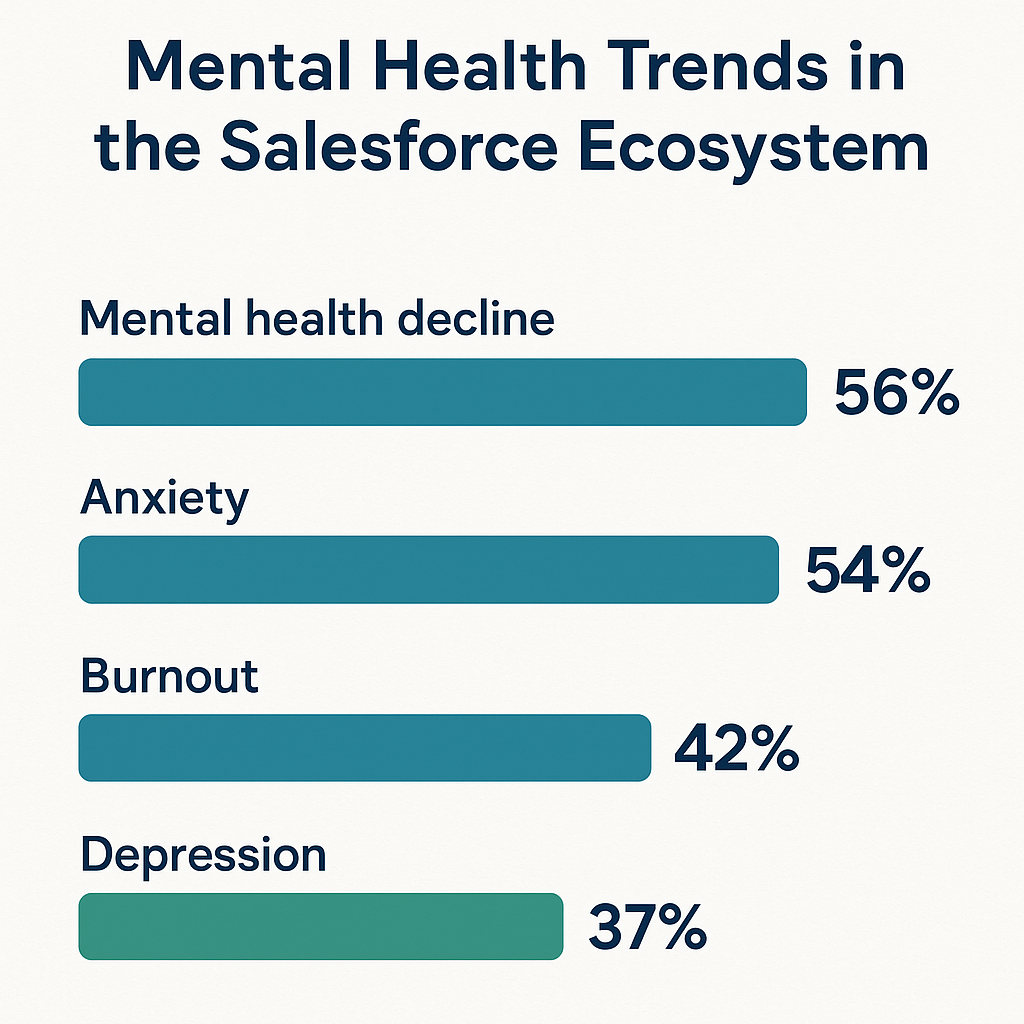
Introduction: Mental Health Trends in the Salesforce Ecosystem
The Salesforce ecosystem, comprising professionals such as developers, administrators, consultants, and business analysts, is one of the most dynamic and fast-growing communities in the tech industry. However, the rapid pace of innovation, high client expectations, and the pressure to continuously upskill can take a toll on mental well-being.
This blog explores the latest mental health trends in the Salesforce ecosystem, including challenges faced by professionals, initiatives promoting well-being, and strategies for maintaining mental health in a high-pressure industry.
Table of Contents
1. The Growing Awareness of Mental Health in Tech
1.1 The High-Stress Nature of the Salesforce Ecosystem
Salesforce professionals often deal with:
- Tight deadlines – Clients and employers expect quick turnarounds for implementations and problem-solving.
- Constant learning – With three major releases per year and hundreds of new features, staying updated is mandatory.
- Workload pressures – Admins and developers frequently juggle multiple projects, leading to burnout.
- Remote work challenges – While remote work offers flexibility, it can also lead to isolation and blurred work-life boundaries.
1.2 The Shift Toward Mental Health Advocacy
The tech industry, including the Salesforce ecosystem, has seen a cultural shift toward prioritizing mental health. Key indicators include:
- More open discussions – Trailblazers (Salesforce professionals) are increasingly sharing their struggles with stress, anxiety, and burnout in forums, blogs, and events.
- Corporate responsibility – Salesforce as a company has implemented wellness programs, mental health days, and employee support systems.
- Community-driven initiatives – Groups like Mental Health in Tech (MHIT) and Salesforce Ohana promote psychological well-being.
2. Key Mental Health Challenges in the Salesforce Ecosystem
2.1 Burnout and Overwork
Burnout is a major issue, characterized by exhaustion, reduced performance, and detachment. Common causes include:
- Unrealistic expectations – Clients or employers may demand rapid deployments without proper resources.
- Always-on culture – The pressure to respond to emails, Slack messages, and support tickets outside work hours.
- Certification fatigue – The need to continuously earn new certifications to stay relevant.
2.2 Imposter Syndrome
Many Salesforce professionals experience imposter syndrome the feeling of being inadequate despite their skills. Contributing factors:
- Rapidly evolving technology – New features and updates can make even experienced professionals feel like they’re falling behind.
- Comparison with peers – Seeing others succeed on social media (e.g., LinkedIn) can trigger self-doubt.
2.3 Remote Work and Isolation
While remote work offers flexibility, it can lead to:
- Loneliness – Lack of in-person interactions reduces camaraderie.
- Difficulty disconnecting – Without a physical office, work can spill into personal time.
- Reduced mentorship opportunities – Newcomers may struggle without face-to-face guidance.
2.4 Job Insecurity and Market Competition
The competitive nature of the Salesforce job market can cause anxiety, especially with:
- Economic downturns – Layoffs in tech have increased job security fears.
- Automation concerns – AI and low-code tools may reduce demand for certain roles.
3. Positive Trends Supporting Mental Health
3.1 Corporate Wellness Initiatives by Salesforce
Salesforce has been a leader in promoting employee well-being through:
- Wellness programs – Free counseling, meditation apps (e.g., Headspace partnerships).
- Flexible work policies – Encouraging work-life balance with hybrid and remote options.
- Mental health days – Encouraging employees to take time off for self-care.
3.2 Community-Led Mental Health Advocacy
- Mental Health in Tech (MHIT) Salesforce Group – A safe space for discussing mental health challenges.
- Trailhead Resources – Salesforce’s learning platform now includes modules on well-being.
- #Salesforce Ohana Support – The “Ohana” (family) culture fosters peer support.
3.3 Mindfulness and Productivity Tools
Professionals are adopting tools like:
- Meditation apps (Calm, Headspace)
- Time management techniques (Pomodoro, Eisenhower Matrix)
- Digital detox practices – Reducing screen time outside work.
3.4 Increased Focus on Work-Life Balance
Companies and professionals are prioritizing:
- Setting boundaries – Defining work hours and sticking to them.
- Encouraging vacations – Taking time off without guilt.
- Reducing meeting overload – Adopting async communication where possible.
4. Strategies for Maintaining Mental Health as a Salesforce Professional
4.1 Setting Realistic Goals
- Break large projects into smaller tasks.
- Avoid overcommitting; learn to say no when necessary.
4.2 Continuous Learning Without Overwhelm
- Focus on one certification or skill at a time.
- Use Trailhead in moderation don’t let learning become a stressor.
4.3 Building a Support Network
- Join Salesforce user groups (e.g., Mental Health in Tech).
- Find a mentor or accountability partner.
4.4 Prioritizing Physical Health
- Regular exercise reduces stress.
- Proper sleep and nutrition impact cognitive performance.
4.5 Seeking Professional Help When Needed
- Therapy and counseling are valuable resources.
- Employee Assistance Programs (EAPs) often provide free sessions.
5. The Future of Mental Health in the Salesforce Ecosystem
5.1 Greater Integration of Well-Being in Work Culture
Expect more companies to:
- Normalize mental health discussions.
- Offer mental health benefits as standard.
5.2 AI and Automation Reducing Workload Stress
- AI-driven tools may handle repetitive tasks, reducing burnout.
- However, professionals must adapt to new roles to stay relevant.
5.3 Continued Community Advocacy
- More events (e.g., Dreamforce sessions) on mental health.
- Peer support networks expanding globally.
Key Takeaways
Mental health is no longer a taboo topic in the Salesforce ecosystem. While challenges like burnout, imposter syndrome, and remote work isolation persist, the community is making strides in fostering a supportive environment. From corporate wellness programs to peer-led initiatives, the focus on psychological well-being is growing stronger.
For Salesforce professionals, prioritizing mental health is not just about personal well-being it’s essential for sustained career success. By setting boundaries, seeking support, and leveraging available resources, Trailblazers can thrive in this fast-paced industry without sacrificing their mental health.