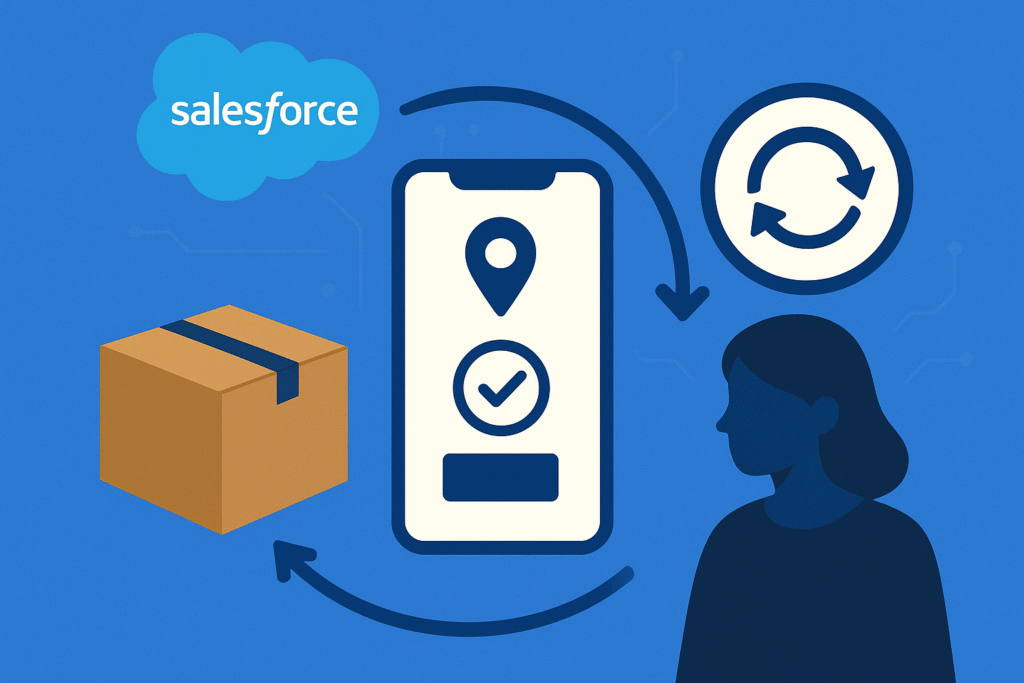
Unify Shipping, Tracking & Returns Seamlessly in Salesforce
Introduction: Unify Shipping, Tracking & Returns Seamlessly in Salesforce
Modern businesses know that winning a customer doesn’t end at checkout. The real test begins once the order is placed. Today’s customers expect instant shipping confirmations, accurate tracking updates, and effortless returns. If these steps are clumsy, even the best products can’t stop churn.
This is why unifying shipping, tracking, and returns in Salesforce has become essential. Salesforce already the backbone of sales, service, and customer data—can also manage the post-purchase experience. When logistics and customer service unite under one platform, businesses reduce costs, delight customers, and build long-term loyalty.
This blog explores how companies can integrate these workflows into Salesforce, the benefits of doing so, the tools available, and the best practices to succeed.
Table of Contents
Why the Post-Purchase Journey Matters
Too often, businesses invest heavily in lead generation, marketing automation, and sales enablement but neglect what comes after—the delivery experience. Yet, this stage can make or break relationships.
Shipping: Customers expect orders to leave warehouses quickly and without errors.
Studies confirm this: over 90% of customers say they’re more likely to shop again with retailers offering hassle-free returns, and nearly all expect proactive shipping updates. Salesforce gives businesses the framework to meet these expectations.
Salesforce as the Central Hub
Salesforce excels at consolidating customer interactions into a single source of truth. Extending this to logistics provides:
Unified Data: Orders, shipments, and returns linked directly to customer profiles.
Automation: Shipping labels, tracking updates, and refund triggers run without manual intervention.
Customer Empowerment: Service reps and self-service portals provide instant answers.
Analytics: Managers track delivery performance, return rates, and carrier reliability.
Instead of siloed systems a webstore for orders, a carrier portal for shipping, and spreadsheets for returns Salesforce acts as the command center.
Shipping in Salesforce: Automating Fulfillment
The first step post-sale is getting the product shipped. With Salesforce integrated into carrier networks, this step becomes frictionless.
System validates address and chooses best carrier.
The label is generated instantly within Salesforce.
Customer receives branded confirmation email.
Benefits:
No need to log into separate carrier portals.
Lower error rates due to automation.
Consistency across regions and carriers.
For example, a Salesforce-enabled retailer can print DHL or FedEx labels directly from their dashboard and update the customer within seconds.
Tracking: Creating Transparency
Once shipped, tracking is where customer anxiety kicks in. A lack of updates often leads to costly support calls. Salesforce integrations solve this.
How it works:
Tracking numbers automatically link to Salesforce records.
Carrier status updates flow into Salesforce in real time.
Automation sends SMS/email notifications at key milestones.
Service Cloud agents view current package location instantly.
Benefits:
Reduced “Where is my order?” inquiries.
Proactive alerts for delays or exceptions.
Stronger trust through transparency.
Imagine a fashion brand using Salesforce: when UPS reports a delay, the system automatically creates a case, notifies the agent, and emails the customer avoiding frustration.
Returns: Turning Hassles into Loyalty
Returns are inevitable, but they don’t have to damage profitability. In fact, handled well, they increase retention. Salesforce streamlines the process end-to-end.
How it works:
Customer requests return via portal or service agent.
Salesforce generates a Return Merchandise Authorization (RMA) and shipping label.
The return package is tracked like an outbound shipment.
Refunds or exchanges are triggered automatically once received.
Cost Savings: Fewer manual steps and fewer service tickets.
Scalability: Handle peak seasons without adding staff.
Data Insights: Track return reasons, delivery speed, and customer impact.
The combination of CRM and logistics ensures businesses don’t just sell but also deliver experiences.
Tools & Integrations That Make It Possible
Salesforce doesn’t do shipping alone. It connects with ecosystems and apps:
Salesforce Order Management – Native tool for order fulfillment and returns.
MuleSoft – API integration with ERPs, WMS, and carrier systems.
AppExchange Apps:
Zenkraft (Salesforce-owned)—label printing, tracking, and returns inside Salesforce.
EasyPost – multi-carrier integration.
AfterShip – tracking and branded notifications.
Custom APIs—Tailored solutions for unique workflows.
Together, these tools create a plug-and-play logistics hub inside Salesforce.
Best Practices for Implementation
To get the most from a unified system:
Map Customer Journeys: Identify all touchpoints shipping, tracking, and returns.
Automate Communication: Trigger updates, refunds, and cases automatically.
Brand Experiences: Use customized emails and portals, not generic carrier pages.
Measure KPIs: Track delivery SLAs, return resolution time, and NPS.
Train Staff: Service teams must know how to leverage logistics data.
Plan for Scale: Account for peak-season surges and international carriers.
Common Challenges & How to Solve Them
Carrier Integration Complexity → Use middleware like MuleSoft or prebuilt apps.
Data Sync Issues → Ensure real-time API connections and regular audits.
Return Fraud → Build rules and verification steps into workflows.
Scalability Concerns → Automate as much as possible and monitor system loads.
The Future of Shipping, Tracking & Returns in Salesforce
The logistics future is intelligent and predictive. Expect to see:
AI Insights: Predict late deliveries before they happen.
Chatbots: Customers initiate returns directly through conversational interfaces.
IoT Integration: Smart packages feeding location and condition into Salesforce.
Sustainability: Carbon-neutral shipping and eco-friendly return options tracked in CRM.
These innovations will make Salesforce not just a CRM but a customer operations platform.
Conclusion: Seamless Logistics, Happier Customers
Unifying shipping, tracking, and returns in Salesforce is more than process improvement—it’s a customer experience revolution. By transforming logistics into a seamless, automated, and transparent workflow, businesses turn post-purchase into a competitive advantage.
Shipping becomes faster, tracking becomes proactive, and returns become painless. Service teams save time, customers stay loyal, and managers gain insights to drive growth.